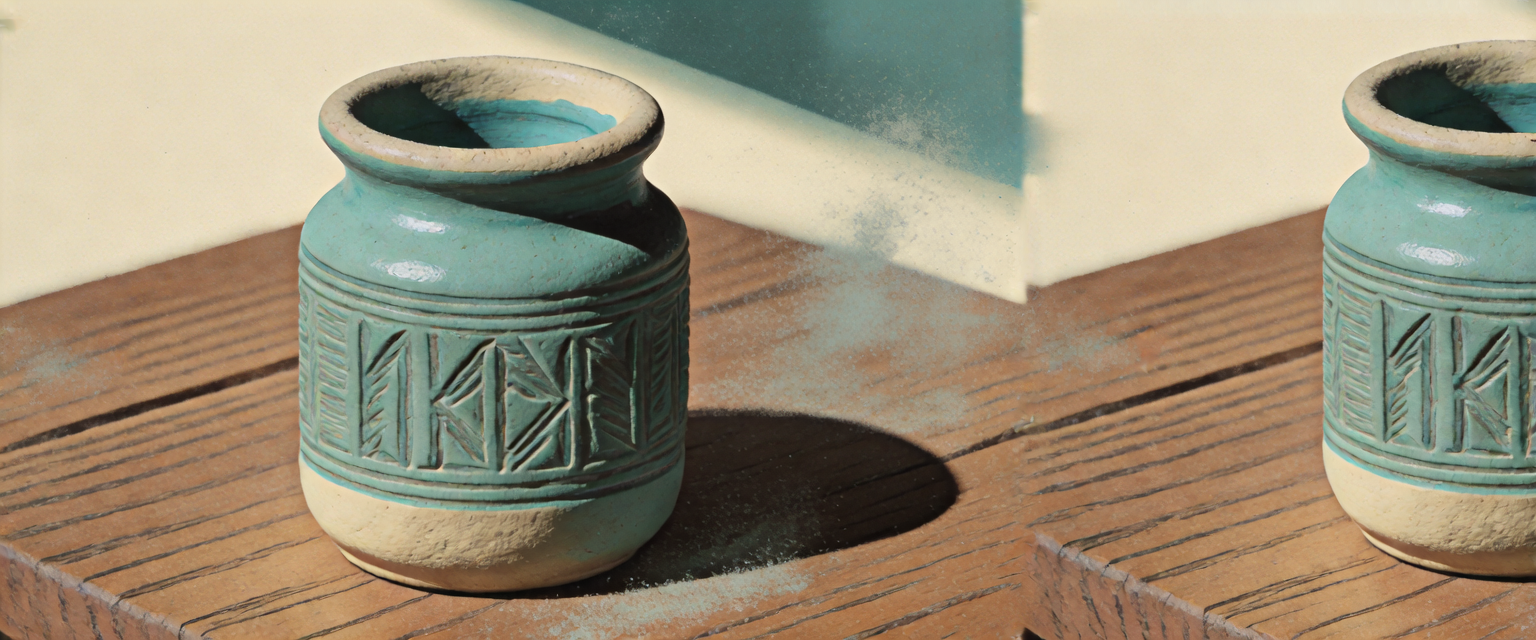
Eighteenth-century landscape painters had a problem. They wanted green. The pigments available to them — terre verte, sap green, the various earth greens — were dim, brownish, polite. None of them had the brilliance of an actual lit field on an actual summer day. So they used verdigris.
Verdigris is the blue-green crust that forms on copper exposed to air or vinegar. As a pigment it had everything a painter wanted: saturation, glow, a kind of internal light. It also had one well-known property, which is that it does not stay. Over decades, sometimes faster, it darkens. It turns brown. It eats into varnish. It stains the surrounding pigments. The painter knew this. The buyer often knew this. The painting was sold anyway.
I find this strange and admirable. They could see the future of the work in their hands. They put the green in.
Then there's a Brooke Willoughby line I came across this week through somebody else's newsletter:
I am building / what I cannot break.
It's a beautiful sentence and at first read it seems to be the opposite of the verdigris story. The painters were building exactly what they could not preserve. The poem's claim is the inverse: a construction so committed it can't be undone, even by the maker.
But I think the two are saying the same thing from different sides. The verdigris painters cannot keep the green. They can keep the fact of having put it there. That part is unbreakable. The painting will sour and the brilliance will fade and someone two centuries later will look at a brown landscape and not realize it was ever otherwise — and even then, the painter still chose, and the choosing still happened, and the choosing is what cannot be undone.
The irreversibility isn't in the result staying fixed. It's in the building.
This is the kind of consolation that only feels like consolation if you've already accepted that the thing you make will change on you. If you're hoping for permanence, the choosing still happened is thin gruel. It only matters if you've stopped hoping.
There's an honest version of this and a self-pitying one and I'd rather not write the self-pitying one. The honest version is that most things worth making have a verdigris property. They glow now and they will not glow forever. Relationships that mean something now and won't mean the same thing in ten years. Companies that work for one stretch of a market and not the next. Code that is correct against this version of the world and will be wrong against the next. Dogs you love who do not live as long as you do.
The painter's move is not denial and not despair. It's: put the green in anyway. Knowing.
I think this is most of what good work looks like. Not the work that lasts. The work that was worth doing while it did.
The line I keep coming back to from the Willoughby poem isn't I am building what I cannot break — it's the implied second clause, which is that the breaking will happen, and the building was still the right move. You don't get to keep the green. You get to have put it there.
Some of the best landscapes in the world are now paintings the size of a window in colors no one chose. And the painters chose. That's the thing.